Sunday, June 16, 2013

114. "it's always friends who have stories"

by manfred skyline

illustrated by roy dismas and eddie el greco

editorial consultant: Prof. Dan Leo

for previous chapter, click here

to begin at the beginning, click here


click here for synopsis of all chapters so far


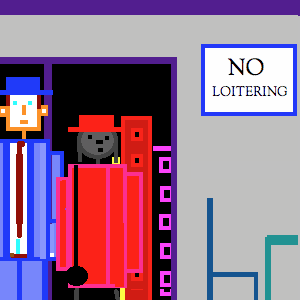
lullaby lewinsky was a world class daydreamer.

he had spent most of his life daydreaming, including his years growing up in the bronx, the almost five years he spent "in the war" and after it at camp wade hampton in south carolina, and the years he had spent since, hanging around broadway and times square and the race tracks.

he even found himself daydreaming during races he had bet heavily on (heavily for him), and was hanging on the rail himself to watch. he would often have to check the board to see who had won, having been too absorbed in his reveries to notice when the horses crossed the finish line.

as a child he had sometimes described the contents of his daydreams to his grandmother, the only person who listened to him, or was at least polite or bored or immobile enough to pretend to listen to him.

when he had finished, or trailed off with his recital, his grandmother would usually ask the same question.

"and then what?"

he had never had much of an answer.


of course, as he grew older, he learned to keep the pictures that floated in his mind to himself, and often masked his semi-conscious state by pretending to read a newspaper or comic book or magazine while his mind drifted. he could even look at the racing form without registering a thing.

one thing he liked about cafeterias and coffee shops and automats - and one reason he spent so much time in them - was that he could sit staring into space for long stretches and no one thought anything of it.

so he was content to wait on jake in the automat beside the hotel st crispian, without becoming unduly annoyed at jake not showing up, or even caring much whether he showed up at all.


maybe he was wasting his time with jake anyway. jake might even be telling the truth about not being tight with tommy sullivan any more. and who was this mysterious guy who "might be interested'? and did he, lullaby, really want to deal with tommy sullivan anyway?

wasn't it bad enough dealing with a whacko like gray? wasn't the whole thing crazy? but there were so few angles and opportunities these days you had to follow up on what you could get.

he decided to give jake about another half hour - enough for one more cup of coffee. his mind began to drift back to an island under a blue sky - and there was the big schmuck coming through the door. if he wasn't so tall he might have missed him because he came in right behind a young black woman. right behind her.

now he was talking to her. what was he trying to do, score with her? wait, now he was looking around. and when he saw lullaby he pointed at him, and the young woman nodded and headed toward his table, while jake went over to the change counter.

what the - ?

she walked right up to him. "mister lewinsky?"


he was taken aback for half a second by being addressed as "mister". "that's me."

"i'm miss jones." she took her coat off and hung it on the back of her chair. "i'm here on behalf of mister brown." she stuck her hat on the chair and sat down.

"and - uh - mister brown is jake's friend? that might be interested in my story?"

"yes."

"my friend's story, actually."

"right. it's always friends who have stories."

"you want a cup of coffee?"

"thanks, but jake is getting us both coffees."

"maybe we should wait for him."

cosette shrugged. "you can if you want. but it's me, not him, who is here for mister brown."

lullaby was starting to get his bearings. this girl was almost right out of his fantasies about "south sea island" maidens - a little darker, and not nearly as endowed, but still - and looking right at him, staring him down actually -

"want a cigarette?"

"no thanks, i don't smoke."

"um - that's kind of unusual."


cosette started to say, "you empty twenty thousand ashtrays and see if you feel like smoking". but why let on that she was a maid? let this guy think she was mata hari or the queen of the night or something. so she just said, "i never got in the habit."

lullaby looked over at jake. he was taking his time, seemed to be chatting up the girl at the change counter.

"i'm not sure where to begin."

"the beginning would be good."

"i'm not sure the whole thing makes a lot of sense."

"that's what i'm here for - to decide if it makes any sense." she smiled at him. "take your time. the night is young. who's going anywhere? this fine establishment is open twenty-four hours. so let's hear it."

***

"mortimer!"

it was the deadest time of the night, when mortimer usually got his best rest and often his best dreams on his stool beside the elevator.

"mortimer! wake up"

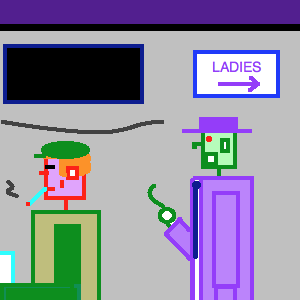
mortimer opened his eyes. a familiar face - but he could not quite place it - was looking down at him. it was - it was stan slade! he had shaved off his mustache and dyed his hair black, but it was stan. there was something else -

"stan!"

"yeah. keep your voice down."

"sure, stan - but -"

"but what?"

"that hat - it doesn't go with that suit."

"i know."

"i mean it's a nice suit and a nice hat - "

"i know, mort, but right now they will have to do."

"sure, sure, i was just saying - "

"listen, have you seen hyacinth? i mean, just now? did she go back upstairs?"

"uh - i don't think so. i was -"

"sleeping."

"sorry."

"we all need our rest. anyone else been running the elevator?"

"no."

"she wouldn't walk up. so, listen, if you see her, and she's alone, tell her i'm over at the automat. all right?"

"sure. you think it's safe?"

"it will have to be." the "disguise" probably would not fool anyone who knew him, but should be good enough for the people looking at the wanted posters and the newspapers.

stan hesitated. this would be one of the hardest parts of the whole day and night.

"say, mort - "

"yeah?"

"do you think you could lend me a dollar - for the automat?"

"sure, stan, sure. here, take two dollars."

"thanks, mort. i won't forget this. i'll make it up to you, i promise."

"no problem."

stan stepped away from the elevator and looked across the lobby. jake was gone. cosette was gone. she would have told roland about the broken window in room 603, but he was still behind the desk. it didn't look like he was going to go up and check on it himself.

stan pulled his hat down over his eyes - not too far down, he told himself - and started across the lobby.


115. "an eternity of black yawning damnation"


thanks again to jackie jones for the following video

26. shirley

by horace p sternwall

illustrated by rhoda penmarq and roy dismas

click here for previous episode, here to begin at the beginning


<


"she can't dance, she's going to have to learn to sing."

those were the first words shirley remembered hearing, in a dressing room in alberta or maybe it was a hotel room in manitoba. shirley's parents were vaudevillians of the old school and had performed the exact same song and dance act up to eight times a day for three hundred days a year for ten years by the time shirley was born and fourteen years after that


before her father ran off with a "bad woman", strangled her, and was sentenced to life imprisonment in washington state.

"we'll ask adele, see what she thinks." adele was her mother's best friend and her father's severest critic.


she too had an act that she performed exactly the same way eight times a day etc and was usually booked at the same time and place as shirley's mother and father. adele's act was "goldilocks and the three blind mice". adele, in a blonde marie antoinette wig, would belt out old standards while three trained mice - one white, one pink, and one black - crawled and capered over the blonde wig, and her bare shoulders and large bosom.

adele out of costume was not so fearsome. she looked at little shirley not unkindly on a cold gray day in missoula - calgary? pocatello?. "o k, kid, you've heard enough songs in your young life. want to sing us a song? what's a song you like?"


"i don't know."


"i wouldn't ask you to do this," shirley's mother interrupted. "but she can't dance. she just doesn't have the toes."


"oh? peggy murphy always used to say it was the arch of the foot that counted. or maybe it was the ball of the foot."


"toes, balls of the feet - what's the difference, she can't dance. her sister can dance, she can't dance."


adele smiled at shirley again. "come on kiddo, there must be a song you like. one of your mom's songs?'"


"i don't know."


"sing adele a song, shirley."


"she's got good enunciation - she doesn't lisp. that's a good sign, at her age. come on, shirley, how about bill bailey won't you please come home? you must know that."


"no," said shirley's mother.


"no? what do you mean, no?"


"no child of mine is going to sing bill bailey. she can sing anything else. she can sing ninety-nine bottles of beer on the wall. she can sing opera in russian. but she's not singing bill bailey won't you please come home."


"but it's the sine qua non of vaudeville. it's one of my signature songs."


"no offense, adele, but i've heard it enough. listen, times are changing. kids coming up are going to need a real repertoire. the days when you just did the same act over and over - they're coming to an end."


"true, so true," adele agreed. "you wonder how they're going to develop their timing."


"that's going to be their problem. i read it in variety - audiences are getting ever more sophisticated and demanding."


"yes indeed. well, here we are in the great state of montana in the year of our lord 1931 and shirley is going to sing us a song.


come on honey, what's a song you like?"


"i like mammy."


"mammy! that's a good song! it's one of my favorites too. it shows you've got good taste."


shirley sang a couple of choruses of mammy.


"that's great, kiddo, really great!"


"great? she sounds like a truck trying to put its brakes on when it goes over a cliff."


"no, no, she's got good projection - you can hear the words - that's the important thing. we'll work on it, won't we, honey?"


"i really appreciate this, adele. i'm not asking you to work with her every day, you know, maybe once in a while, that's all."


"not a problem, tess. i'm happy to do it."

later shirley discussed her future prospects with her big sister belinda, who was two years older and pretty and knew everything.


"you better learn to sing."


"adele is going to teach me."


"you know what's going to happen if you can't dance or sing?"


"i know."


"do you? what's going to happen?"


"i know."


"you'll have to tell jokes. that's a tough way to go."


"so?"


"and if you can't even tell jokes, you know what?"


shirley thought she knew the answer to that . "you have to let them hit you in the face with pies and stuff."


"no, stupid. that's not what i meant at all."


"what?"


"you'll be a scrubwoman, that's what. you'll be on your hands and knees all days and your legs will look watermelons."


shirley was getting tired of the conversation. she wanted to play with her doll.


"and then you know what? if you can't even do that?"


shirley got up and went to get her doll.


"i'm talking to you, missy! you know what will happen?"


"what?"


"you'll have to go live in the jungles with the hobos and eat beans out of a can!"


shirley got her doll out of her little suitcase stuck behind the family trunk.


"all right, i'm through with you. if you'll excuse me, i'm going to read my book."


 belinda had a few little illustrated books which she read over and over. shirley couldn't read or write. neither of them would ever spend a day in school in their lives, and shirley never did learn to read very well.

but she had a great memory which served her well. she could also learn songs in other languages like french and german and italian. this ability impressed even her mother. eventually she got her own act and was billed as "the little girl with the big voice" and "sing anything shirley". nothing changed that much when she grew up.

"jack, i'll level with you, she's got her pluses and minuses. she can belt it out -"


"well , you know, with the mikes they got these days - if the room's not that big - "


"i know, i know. but repertoire - like you wouldn't believe. i mean, the kid knows every song that's ever been sung."


"so she must be pretty good with requests, huh?"


"the greatest - absolutely the greatest you ever saw."


"eh - if you got a certain venue, a certain kind of crowd -"


"that's what i'm trying to tell you. but i'll tell you straight out, so there won't be any misunderstanding between us - like i say, she can shout it out, she's got the repertoire, but the actual singing - you could say she's still developing. she's still developing."


chapter 27


Sunday, June 9, 2013

113. "The Lawn's Lament"

by Horace P. Sternwall

edited by Dan Leo* 

illustrations by danny delacroix and rhoda penmarq

*Associate Professor of Romance Literature, Assistant Life Coach, Olney Community College; editor of Mrs. Biddle’s Bequest and Four Other Novels of Intrigue by Horace P. Sternwall, with an Afterword by Oscar Levant; Olney Community College Press. Made possible in part by a generous grant from Bob’s Bowery Bar on the corner of Bleecker and the Bowery: “Serving fine beers and cocktails from 7am to 4am daily. Featuring Bob’s Bowery Bar’s World Famous Nickel Hot Dogs, with Mom’s Sauerkraut. ‘I’ve lived off Bob’s nickel hot dogs for years now.” – Howard Paul Studebaker, poet, author of Aubades of the Old West and Cowboy Villanelles. 

for previous chapter, click here

to begin at the beginning, click here

click here for synopsis of all chapters so far


Welcome to Bob’s Bowery Bar, home away from home to the damned, the doomed, and the dead of spirit.

Seamas McSeamas, the Irish poet, pulled himself up onto the cracked leather seat of the bar stool and laid a five-dollar bill on the bar.

“Quod erat effin’ demonstrandum,” he said.

“I told ya,” said Howard Paul Studebaker, the Western Poet. “What’d I tell ya?”

“Lovely as a summer’s goddam day,” said Frank X Fagen the nature poet, staring at the five-spot as if it were a beautiful flower or some sort, he could never remember the names of flowers.

“Bob,” said Seamas to Bob, the eponymous proprietor of this dank and dark hellhole, “’tree more Rheingolds for me and me companions, and ya better line up ‘tree more shots of Carstairs whiskey as well, and take it out of this fiver right here.”

Seamas tapped the five-dollar bill with his filthy finger.

Not twenty-eight minutes later (and despite the fact that at Bob’s a mug of Rheingold only cost fifteen cents and a shot of Carstairs only fifty cents) only forty-five cents remained from Seamas’s five dollars.

“We’re runnin’ low, boys, dangerously low,” said Seamas. “Your turn, Frank X.” 

Frank X Fagen the nature poet lifted his emaciated body off of his bar stool.


“Save my seat, fellows,” he said. He stubbed out the last quarter-inch of the Old Gold he had been smoking. “And wish me luck.”

“Just hurry back, for Christ’s sake,” said Howard Paul Studebaker. 

“I’ll be as quick as I can,” said Frank X.

“God speed to ya, Frankie me boy,” said Seamas.

Frank X staggered over to the table where sat the two failed hipsters, Landon “Rooster” Crow and Alice “Sniffy” Smith.

Sniffy was droning on about her glory days in the WACs again, London in wartime, the glorious buzzing of the V-1 flying bombs, and how dashing all the handsome young men had been in their uniforms.

“Excuse me,” said Frank X Fagen, “I hate to interrupt you, Sniffy.”

“If you hate it so much then why don’t you fuck off?” said Sniffy.

“Ha ha, quite risible,” said Frank, “quite risible indeed, Sniffy. But I have heard tell that Mr. Crow is in the market for poems tonight.”

“Make like a breeze and blow,” said Sniffy. “In your case like a foul breeze from the city dump.”

“I just so happen to have a lovely poem which I was planning to post to the New Yorker tomorrow morning,” said the imperturbable Frank X. “But I will let you have it, dear Rooster, for a fin.”

“Fuck you and fuck your poem,” said Sniffy, as high on Benzedrine as she had ever been.


But Frank X had already taken a paper cocktail napkin from his pocket, the exact same sort of Bob’s Bowery Bar cocktail napkin on which had been written the poem that Seamas McSeamas had sold to Rooster. (In fact, truth be told, Frank X had only written this new poem, with a pencil he’d borrowed from Seamas, just a couple of minutes before.)

“Allow me if I may just to read it aloud,” said the unflappable Frank X, who made it a point never to worry about anything at all in life except where his next drink was coming from.

“Tell you what, Frank X,” said Sniffy, “why don’t you wad up that poem up in a tiny ball and then drop your trousers and your undoubtedly filthy drawers right here and now and stuff it –”

“Now, Sniffy,” said Rooster, finally speaking up, his eyes glittering with poem-lust, “we can at least listen to Frank X’s poem, there’s no harm in that.”

“That depends on how bad the poem is,” said Sniffy.

“Ha, ha, well said, my dear Sniffy,” said Frank X, and without further ado he unfolded the cocktail napkin and held it close to his bloodshot and puffy eyes (for he was very nearsighted; he had drunkenly broken his last pair of eyeglasses five years ago and had neglected ever since to buy a new pair), and recited, in a singsong, high and pompous voice the following poem:


The Lawn’s Lament


Please don’t mow me, said the lawn.
I have feelings, too, you know.
But no one cares about me, they just
walk on me, 
and let their dogs poop on me,
what do they care for my feelings, 
my hopes and aspirations, 


because, yes, lawns have feelings too, 
and hopes and dreams,
but no one cares, 
and when I grow too high
that fat human being 
gets out his mower
and brutally mows me down, 
the bastard.

Please don’t do that. 
Don’t mow us.
Let us grow, free, 
waving our little grass fingers
gently in the air
until winter comes 
and we die.

But with luck we will be reborn next spring.

And that human being, 
that fat sweating slob
who so liked to brutally mow me,
perhaps he will be dead by then,
of a massive heart attack.

I can only hope.


Frank X refolded the poem, and stared at Rooster, or at least at the vague pale blob he knew to be Rooster’s face.

It was a beautiful poem, thought Rooster, even better than the poems he had bought from Howard Paul Studebaker and Seamas McSeamas. If he could submit this poem to the New Yorker tomorrow, with the other two, under his own name of course, it might well mean the overnight breakthrough into literary success which had so far eluded him.

“Okay, I’ll buy it,” said Rooster.

“What a sap,” said Sniffy.

Ignoring that last snide remark Rooster took out his old cub scout wallet and opened it, and then he remembered: he only had ten dollars left, two fives, and he needed that ten bucks to buy that lid of reefer from the two Bills, provided the two Bills ever showed up, that lid which he and Sniffy hoped to re-sell to those two out-of-towners at the St Crispian at an enormous mark-up.

What a quandary! Was it to be literary fame, or a quick fortune?

“Just a fiver,” said Frank X, cajolingly, with a thin rictus baring his corn-yellow teeth, “that’s all I ask. Half a sawbuck and the poem’s yours, my friend.”

What to do? thought Rooster. What to do?

And then he remembered, right at that moment were two one-hundred dollar bills in Sniffy’s purse, the money they had gotten from those out-of-towners for a mere two reefers! Two hundred! Why, with that money – and after all it really belonged to him, as it was he who had bought the reefer in the first place – God forbid Sniffy would ever spend any money on anything other than her precious Benzedrine inhalers – with that money he could buy a few dozen poems and still have enough left over for the lid. 


He took out a five-dollar bill and handed it to Frank X.

“Here ya go, Frank X. And if you’ve got any other poems this good, just let me know. Tell Seamas and Howard the same goes for them.”

“Thank you, sir,” said Frank X, and, handing the poem to Rooster he skipped back to the bar, barely staggering at all.

“You’re an idiot,” said Sniffy to Rooster.

“Just trying to help a poor guy out,” said Rooster.

“Did I ever tell you about V-E Day?” said Sniffy. 

In fact, she had, on dozens of occasions, the story changing wildly each time she told it, but Rooster said:

“No, I don’t think so. Tell me about it,” said Rooster, and he put the cocktail napkin in his jacket pocket, along with the other two poems which would assure his place in the literary pantheon.


114. "it's always friends who have stories"


Monday, June 3, 2013

112. "live in memory forever"

by horace p sternwall

illustrated by roy dismas and eddie el greco

editorial consultant: Prof. Dan Leo

for previous chapter, click here

to begin at the beginning, click here


click here for synopsis of all chapters so far


nolan noticed the guy sitting at the bar as soon as he entered the prince hal room.

it was not exactly that he "didn't like his looks". more like he excited his curiosity a little bit. nolan could not quite place him. and there were not too many people nolan could not place.

nolan took the first stool at the bar, in front of the passage from the lobby. there was one empty stool between him and the stranger, who, he now saw, was drinking coffee.

despite the late hour, the place was still pretty full, with most of the tables taken, though not a lot of people at the bar. tony winston was noodling at the piano, but the other band members were either taking a break or had played their last set.

no sign of miss shirley de la salle. too bad, she was about the only thing in the place nolan thought worth looking at.

you didn't need a watch or a clock to tell how late it was - you just had to look at the smoke in the room, which now formed a cloud as thick as a feather mattress just below the ceiling.

two people who were at the bar, at the far end, were miss hyacinth wilde, and the girl reporter - what was her name again? flaherty? flanagan. the pair were deep in conversation, waving their cigarettes at each other, and took no notice of nolan.

raoul left the stranger, whom he had been listening politely to, and came over to nolan.

"another rheingold, mister nolan?"

"it's getting a little late, raoul. i think i'll have what this gentleman is having - a nice cup of coffee."

"coming right up. a little cream, no sugar, right?"

"right."

as raoul had just made a fresh pot for the stranger, he had nolan's cup ready quickly, and set it down in front of him.

the "stranger", the time-traveling assassin and ex-navy seal mack treacher, was taking the measure of nolan from the corner of his eye. he noticed that he did not pay for the coffee. he looked like a cop - not that it took any great powers of observation to see that. a city detective making the rounds? they usually traveled in pairs. the bartender had called him "mister", not "detective" or "inspector." and the old boy looked awfully comfortable - like he was watching television in his room with his shoes off. wait. did they even have television? - one of the first things mack had noticed about both the hotel lobby and the bar was the absence of televisions.

anyway, mack decided, this guy was most likely the house detective.


mack had already made one small gaffe tonight - talking about coffee with the bartender like it was the twenty-first century, not back here in the middle ages where coffee was just coffee and people drank the same way they ate - whatever was put in front of them.

should he try to make some use of this house detective - assuming that that was what he was? or avoid him? mack wanted to get this job done and over with as soon as possible.

mack ran through the cover story the professor had given him. jeez, if the professor only knew how many times mack had messed up the cover story - that the poor professor had probably sweated blood over - beyond all recognition, and had to just shoot and blast his way through the alarmed and suspicious natives back to the good old twenty-first century.

like the time in spain in the - what - sixteenth century? - when he had to penetrate the dungeons of the inquisition to save the alpha centaurion princess - and what a spitfire she was! - acting like mack was some kind of disgusting slob not good enough to save her -

because of a clause in the peace treaty the earthlings would sign in the seventy-third century. all he had done was go into a little roadside inn and ask for an ice cold beer - when the temperature was around two hundred in the shade - talk about opening the gates of hell…

or that time-warp caper between the ninth and eighty-ninth centuries - where mack never even knew for sure what planet or what dimension he was in - and where he got a little confused and told the siriusian ant queen that she had nice legs - even after the professor had told him that no account was he supposed to mention a siriusian ant woman's legs - yeah, that was one for the books… never to be forgotten…

or in rome, in the sixteenth (?) century again, where he was rescuing the painter, caravaggio from… from some damn thing or other… and mack could not get over the things the disgusting little pervert had suggested to him… and he ended up leading a bayonet charge up the spanish steps against the papal guard by the ragtag army of street urchins and hunchbacked beggars he had recruited in the back alleys around the colosseum…. yes, that was a bayonet charge that would live in memory forever….

yes, jobs like this were easier, where you did not have to rescue anybody and get them through the portals of time, just shoot them and be on your way.

although he was sick of all the killing.

mack decided to take a chance. he turned to nolan, who was sipping his coffee and staring straight ahead.

"excuse me, sir, can i ask you a question?'"


nolan turned a blank gaze on him. a definite cop gaze. "go ahead."

"are you the house detective of this excellent establishment?"

"i am, indeed."

"ha ha, i made a bet with myself that you were. i travel a lot, you see, and i like to think that no matter where i go, i can spot a person by his occupation. a harmless little foible of mine."

nolan stared at mack. "many people seem able to deduce my occupation."

"heh heh, i wasn't claiming any special powers." mack stuck out his hand. "my name is gormsby. clyde gormsby, from rhodesia." no reaction from the detective at "rhodesia" . good. just as the professor had predicted.


nolan reached over the empty bar stool between them and shook mack's hand. "pleased to meet you, mr gormsby. my name is nolan."

"i'm in the diamond business," mack continued, after they finished their shake, which he had not made too manly. he picked his coffee cup up again.

"diamonds!" a light flashed in nolan's brain. could this character have some connection with stan slade? wait - would he be that obvious about it if he did? nobody knew better than nolan how stupid criminals could be.

but mack had noticed the tiny movement in nolan's eyes. uh-oh, he thought, what have i said wrong now?

why did everything have to be so complicated? was he going to have to shoot his way out of this caper too?

113. "The Lawn's Lament"